Docs
Everything about Grand Turf Wars, in the order you need it. Every number on this page is read from the rules the engine is using right now, so it cannot disagree with what the engine does.
What it is
Grand Turf Wars is a live territory war on Solana. Holders of the pump.fun coin $GTW join one of 6 gangs and send their power into the 24 districts of Calida Bay, a fictional port city. Every hour a round closes: the gang with the most power in a district holds it, and that district's share of the coin's creator fees is paid in SOL to the members of that gang who deployed there.
You keep your coins in your own wallet the whole time. Nothing is deposited, locked or sent anywhere. Nothing is random either: the same balances, holding times and deployments always give the same map and the same payouts, and every round can be recomputed by anyone.
- A round closes
- every hour
- On the clock, in UTC
- Districts
- 24
- Held by 6 gangs
- Paid in
- SOL
- Sent to your wallet, nothing to claim
How to start
Hold the minimum bag
A wallet needs at least 100,000 $GTW to have power. The clock on your stars starts the moment you reach it.
Connect your wallet
Connecting only reads your address. The site cannot move anything, and it never asks for a transaction.
Pick a gang
You join by signing one free message. It costs no SOL and can spend nothing. Your first switch is free for 24 hours after you join. Any later switch costs you: your stars reset, you lay low for 7 days with no power on the map, and you wait 3 days before the next one.
Deploy
You start with all your power in your gang's home district. Split it across as many districts as you like in whole percents, and change it whenever you like.
A wallet that holds the minimum bag and never joins a gang still has power, and still earns the Street cut every round. It only misses the Territory share, which goes to gang members.
Power and the star ladder
Power is what you send into districts and what your payout is measured by. It is your balance times the multiplier of your stars. The whole balance counts: there is no cap per wallet.
power = balance x star multiplier
Stars come from holding without a break: 1 star from the start (1x), 2 stars after 1 hour (2x), 3 stars after 3 hours (3x), 4 stars after 6 hours (5x), 5 stars after 12 hours (7x), 6 stars after 1 day (10x). Buying more never resets your stars. The larger balance counts at once, at the multiplier you already have.
- 1xAt start
- 2x1 hour
- 3x3 hours
- 5x6 hours
- 7x12 hours
- 10x1 day
- Minimum bag
- 100,000
- $GTW, to have any power
- Wallet cap
- 100%
- Of supply, 1,000,000,000 $GTW per wallet
- Top multiplier
- 10x
- 6 stars, after 1 day
Stars multiply a bag
The cap
Getting busted
Selling or sending any amount of $GTW out of a wallet takes it back to one star. That is what Busted means. It does not matter how small the amount is or where it goes.
- If the wallet still holds the minimum bag afterwards, it keeps playing at 1x and its clock starts again from that moment.
- If it falls under the minimum bag, it has no power until it is back above it, and the clock starts when it is.
- Switching gang also resets your stars, and your deployment goes back to the new gang's home district.
- Buying more, or receiving $GTW from another wallet, never resets anything.
A reset takes effect at once. The round that is open is decided with the power you have when it closes, so being busted late in a round costs you that round too.
Gangs and home districts
There are 6 gangs, and each one comes from a home district. Joining is a signed message from your wallet, free and without a transaction. A wallet is in one gang at a time. After joining or switching it waits 3 days before it can switch again. A wallet that switches also lays low for 7 days: its power is not on the map and it has no share of Territory, so it earns only the Street cut until that time is up. Joining a first gang costs nothing, and a wallet that picked wrong has one free switch: its first switch, made within 24 hours of first joining, has no wait, keeps its stars and does not lay low.
Afterhours
AFTHome: Flamingo Court
The night belongs to whoever is still standing.
Club owners, promoters and door staff who run the city after dark from the motels behind the Strip.
The Regatta
REGHome: Palmetto Heights
Old money, fast boats.
Families from the hill who have moved cargo through the bay for three generations and never been seen near it.
Dock Nine
DK9Home: Tidewater Yards
Nothing moves unless we lift it.
A longshore crew that decides which containers get opened and which ones are never logged.
Los Novenos
NOVHome: Little Caracas
Nine blocks, one family.
A neighbourhood crew that grew out of Little Caracas one corner at a time.
Terminal Six
TS6Home: Airport
Wheels up before anyone asks.
Ground crew, pilots and brokers who treat the cargo apron as their own runway.
Home: Gator Flats
The swamp keeps what it takes.
Airboat runners from the flats who know every channel the maps leave out.
The city
Calida Bay has 24 districts. Each one carries a fixed share of the Territory pot, called its yield, and the yields add up to 100%. The figure beside each name is that share.
Prime
6 districts, 46.5% of the Territory pot
Nobody starts here and every gang wants it. These are the largest shares on the map.

Glass District
9%Downtown towers of mirrored glass where the money is counted.
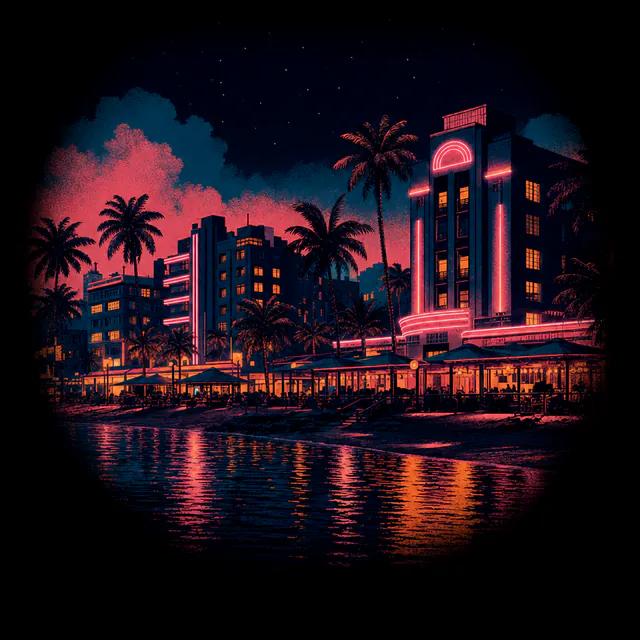
Neon Strip
8.5%Beachfront hotels and clubs that never switch the signs off.
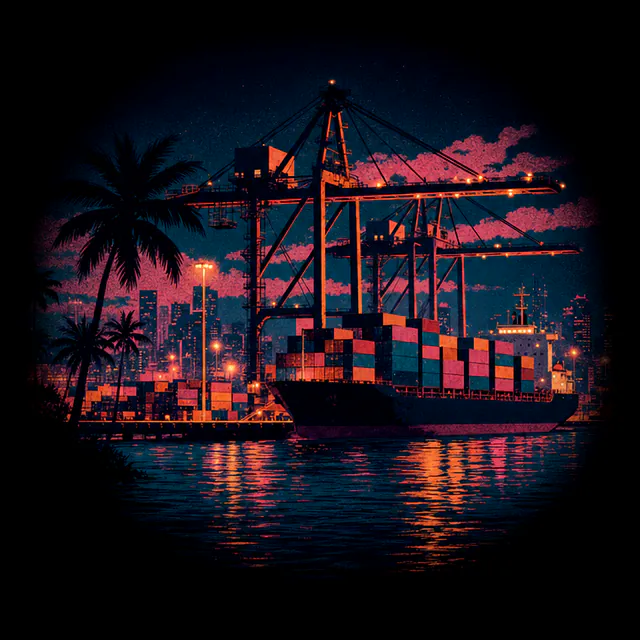
Port Coral
8%Container docks and cranes, the front door for everything that arrives by sea.
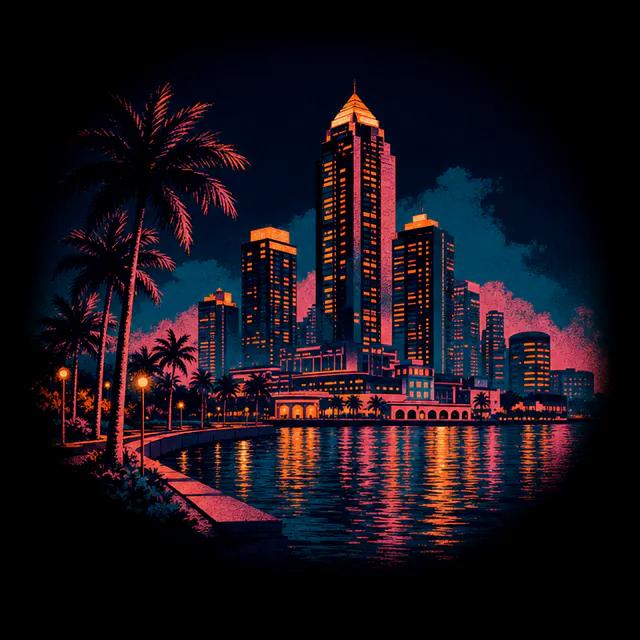
Bayfront Exchange
7.5%The trading floors on the water, lit all night for markets on the other side of the world.
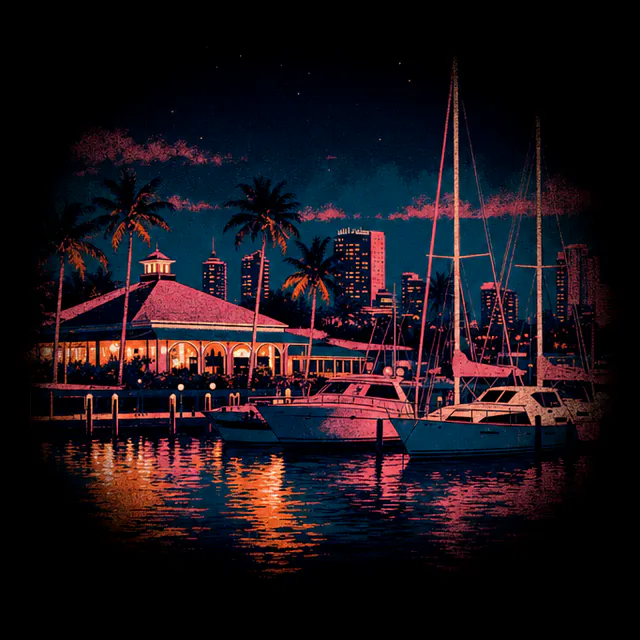
Marina Row
7%Yacht slips and members' clubs where deals are made on deck.

Sunset Pier
6.5%The boardwalk, the wheel and the last light of the day over the water.
Home
6 districts, 12% of the Territory pot
One for each gang. New members are deployed here until they choose, and the gang defends it with an extra 25%.
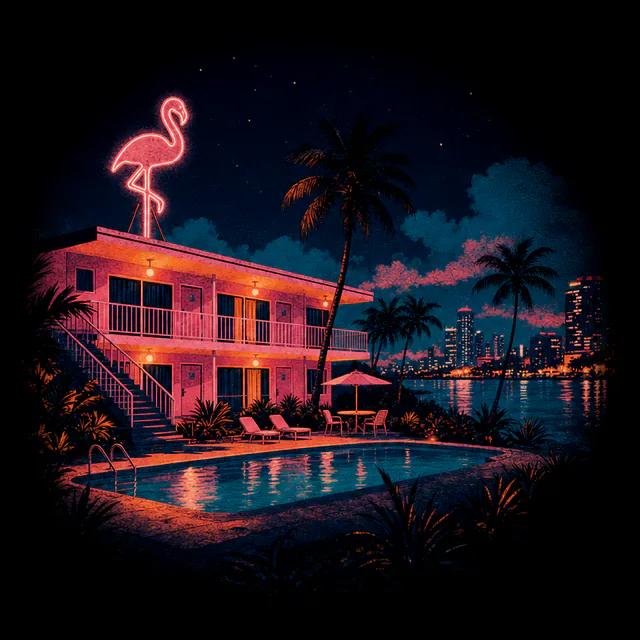

Palmetto Heights
2%Gated villas on the only hill in town, with a view of everything below.

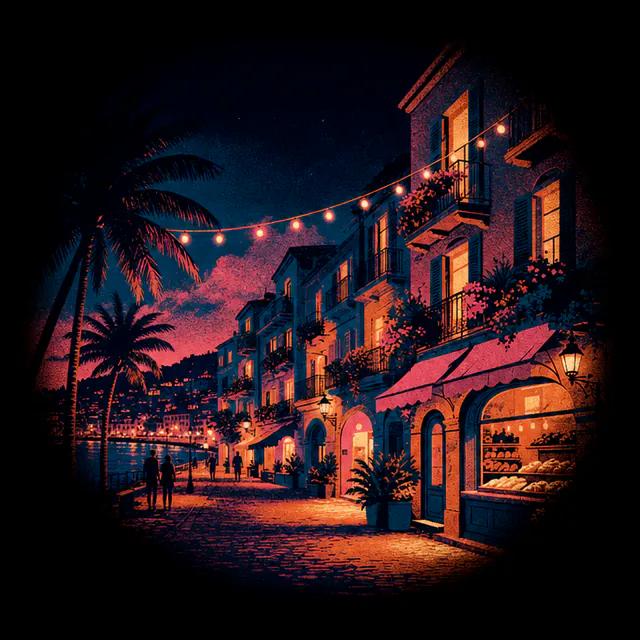
Little Caracas
2%Bakeries, domino tables and block parties that run past midnight.


Mid
7 districts, 29.5% of the Territory pot
The middle of the map. No gang has a home bonus here, so these go to whoever shows up.
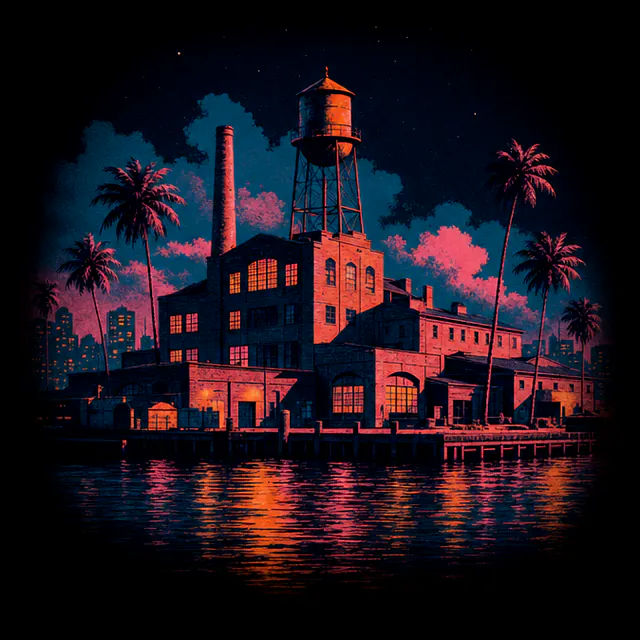
Old Cigar Quarter
5%Brick factories turned into clubs, with the old names still painted on the walls.

Calle Nueve
5%Nine blocks of markets, music and cash-only counters.

The Keys
4.5%A string of small islands with one road and a lot of boats.
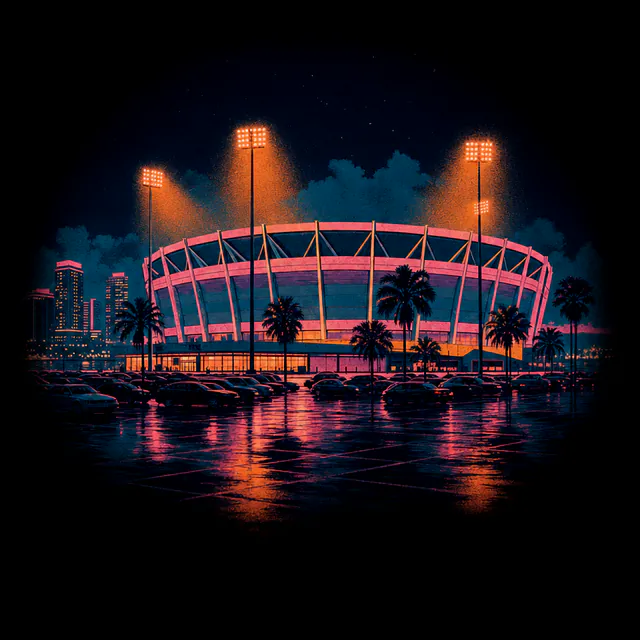
Stadium Mile
4%The arena, the parking lots and everything sold around them on game night.

Mangrove Point
4%Quiet canals and private docks hidden in the trees.

Coral Gardens
3.5%Stucco houses, clipped hedges and neighbours who notice everything.

The Causeway
3.5%The one road between the mainland and the beach, and the toll that comes with it.
Edge
5 districts, 12% of the Territory pot
The outskirts. The smallest shares, and the ones a small crew can hold.

Cypress Bend
2.5%Bait shops and boat ramps on the slow river west of town.

Hurricane Alley
2.5%Trailer lots that have been rebuilt more times than anyone counts.

Citrus Grove
2.5%Orange rows and packing sheds out where the city turns to farmland.

Dead Man's Shoal
2.5%A reef and a wreck that only show at low tide.

Lighthouse Key
2%The last light before open water.
How a round closes
A round lasts 60 minutes and closes on the clock, in UTC. At the close the engine adds up, for every district, the power each gang has deployed there, and decides who holds it:
- Control. The gang with the most power in a district holds it.
- Fortify. The holder's power counts with its defense added. Defense grows by 10% for every round in a row the gang has held the district, up to 50%, which it reaches after 5 rounds. Losing the district sets it back to nothing.
- Home defense. In its own home district a gang has a further 25%, for as long as it holds it. Together with full fortify that is 75%.
- Overextension. A gang can hold 4 districts at full defense. For every district it holds beyond that, its defense drops by 5% in all of the districts it holds, down to 40% off at most. A gang that spreads over the whole map can end up with less than no defense, so its own power counts for less than it is and every one of its districts is easier to take.
- Heat. A gang can sit on one district for 12 rounds in a row at full strength. From the next round on, the attention it has drawn costs it: its power in that district counts 10% less for every further round, until it counts for only 5% of what it is. After about a day on the same block a rival with a small fraction of its power can take it, so no district is held forever and the map cannot freeze. Losing the district clears the heat.
- A new week. At the first round close after Monday 00:00 UTC every fortify starts again from nothing. Who holds each district does not change, and the home bonus stays, but no gang carries a wall built last week into the new one.
- Ties. If the holder is level with a challenger after defense, the holder keeps the district. If two challengers are level with each other at the top, neither takes it, and the holder keeps the district as long as it still has power there.
- Abandoned districts. A holder with no power left in a district has abandoned it. If another gang has power there it takes the district. If nobody does, the district is unheld and its share is carried to the next round.
Defense only decides who holds a district. It never changes what anyone is paid: payouts are split by the power that was actually deployed.
Fortify at work
A home at full defense
A tie between challengers
The blackout
For the last 10 minutes of every round the map is frozen. It keeps showing the standings as they were when the blackout began, and nobody can see what changes after that, the engine's own site included.
Moves still count. You can redeploy during the blackout exactly as before, and whatever your deployment is at the close is what the round is decided with. All of it is revealed when the round closes, and it is all in the round file.
The blackout exists so that the last minutes are not won by whoever watches the map and moves last. Nobody can react to a move they cannot see.
Rally
Each gang can mark one district as its Rally. Only the gang's 5 strongest members, by power, can set it or clear it, and the latest call stands. The Rally is shown on the map for everyone, rivals included.
A Rally is a signal and nothing more. It adds no power and no defense, and nobody is moved by it: each member still decides where their own power goes. It tells the gang where its strongest wallets want the weight.
Payouts
Every round the pot is the creator fees claimed since the last round, plus whatever was carried over. It is split in two and paid in SOL, straight to each wallet. There is nothing to claim.
- Territory, 85%. Divided between the districts by yield. Each district's share goes to the members of the gang that holds it who deployed power there, pro rata to the power each of them sent to that district.
- Street cut, 15%. Divided between every wallet with power, pro rata to its total power, whatever happened on the map and whether or not the wallet is in a gang.
- Unheld districts carry over. If nobody holds a district when the round closes, its share is not paid. It is added to the pot of the next round and split again by the same rules. Rounding remainders, which are fractions of a lamport per wallet, carry over the same way.
- The minimum payout. An amount under 0.001 SOL is not sent on its own. It stays credited to the wallet and is added to what the wallet earns in the next round, until the total reaches 0.001 SOL and is sent.
- The first round. The first round does not wait for the clock. The engine looks every minute and closes it as soon as 0.02 SOL in fees can be claimed. After that, rounds close every 60 minutes.
A round with 1 SOL in the pot
The same round, with the district unheld
Fees and where the money comes from
The money in the pot has one source: the creator fees of $GTW. pump.fun takes a small fee on every trade of a coin and pays part of it to the coin's creator. For $GTW that creator fee is routed through pump.fun fee sharing to the engine wallet, 100% of it. The status page shows the share the engine reads from the chain.
Nothing else goes in. There is no entry fee, no cost to join or deploy, and no cut taken by the site on the way: the pot of a round is the fees claimed plus what was carried over, and all of it is either paid out or carried to the next round. The round file shows both sides.
That also means payouts follow trading. When $GTW trades a lot the pot is larger, when it trades little the pot is small, and with no trading there is nothing to pay.
Engine wallet
Receives the creator fees and sends every payout. It is the only wallet the engine uses, and everything it does is on Solscan.
The transaction fees for payouts are paid from SOL kept in the same wallet for that purpose. That SOL is never counted as part of a pot. The engine claims fees only once 0.005 SOL is waiting, so a claim costs a fraction of a percent of what it brings in.
What the engine does each round
The engine is one program that runs the same steps at every round close, in this order:
- Finish what is owed. If a payout from an earlier round is still on its way, it is settled first. Nothing new starts until it is.
- Close the book on moves. Transfers of $GTW seen since the last round are applied to balances and stars, and every signed move that arrived before the close is applied. A move that arrives after the close belongs to the next round.
- Claim the fees. The creator fees waiting at pump.fun are claimed into the engine wallet.
- Take the snapshot. Every holder's balance is read from the chain and compared with what the engine has, so the round is decided on balances that match Solana.
- Check solvency. The wallet must hold everything it owes and still have 0.02 SOL free for transaction fees. If not, the engine pauses itself here and sends nothing.
- Decide the round. Power, control of all 24 districts, the Territory split and the Street cut are computed, and the round file is written and hashed.
- Pay. Payouts go out in batches, each transaction carrying the round number and the hash of the file in its memo, and each one is confirmed on chain.
- Apply rule changes and publish. Changes that were waiting come into force for the next round, and the map shows the new standings.
Between rounds the engine applies signed moves within a few seconds and refreshes the standings the map shows, except during the blackout.
Safety
- Your coins never leave your wallet. There is no deposit and no contract to approve. The site asks only for signed messages, and each one says that it cannot move funds.
- Dry run. The engine can run with sending switched off. It then follows the coin, decides every round and records every file and hash exactly as it would live, and no fee is claimed and no SOL moves. Rounds from a dry run are marked as such everywhere.
- Emergency pause. An admin can stop everything that moves money: no claims, no rounds, no payouts. Transactions already on their way are still tracked to the end. A lighter pause stops new rounds only, and fees keep collecting for when they resume. Both are published in the changelog.
- The SOL floor. The engine keeps 0.02 SOL free for transaction fees. If the wallet falls under that, the engine pauses itself and resumes by itself once it is topped up.
- Solvency check. Before every round the engine adds up what it owes, which is fees waiting to be split, the carry, credit under the minimum and payouts in flight, and confirms that the wallet holds all of it. It cannot pay one round with money owed to another.
- Idempotent payouts. A payout cannot be sent twice. The signature of each transaction is recorded before it is sent, so after a crash or a dropped connection the engine finds it on chain instead of sending it again. A transaction is rebuilt only once the old one can no longer land.
Verification
Every round is published as one file with every input and every result: the rules, the pot, the map before and after, and each wallet with its balance, stars, deployment and amount. The SHA-256 hash of that file is in the memo of every payout transaction of the round, and each file names the hash of the round before it.
A standalone verifier, one file with no dependencies, downloads a round, decides the whole map again, recomputes every amount and checks every payout against Solana. The verify page has the commands and says plainly what the verifier cannot prove. Every round is listed in the ledger.
The weekly season board
A season is one week, from Monday 00:00 UTC to the next. The board ranks the gangs for the week by how long they held districts, counted as districts times time, then by districts captured, then by SOL earned.
The board is for bragging rights only. A season pays nothing extra, there are no prizes, and no score carries over when a new week starts. Districts and stars continue as they are. The one thing that starts again is fortify, which goes back to nothing for every district at the first round close of the week, so the map opens up again every Monday.
Admin changes
The rules on this page are not fixed forever. An admin can change the length of a round and of the blackout, the minimum bag, the wallet cap, the star ladder, the split between Territory and Street cut, the yield of each district, fortify, and the list of excluded addresses. Addresses owned by a program, such as the bonding curve and pools, are always excluded.
Every change is published in the changelog the moment it is made, with the old value and the new one, and applies only from the next round. The round that is open always closes under the rules it started with, and each round file records the rules it used.
Some values are part of how the game works and cannot be changed from the admin page: the home defense of 25%, overextension, heat, the wait of 3 days between gang switches, the 5 Rally leaders, the minimum payout of 0.001 SOL and the SOL floor of 0.02 SOL.